Control bentonite slurry: QA tests and actions checklist
✅ 21 items
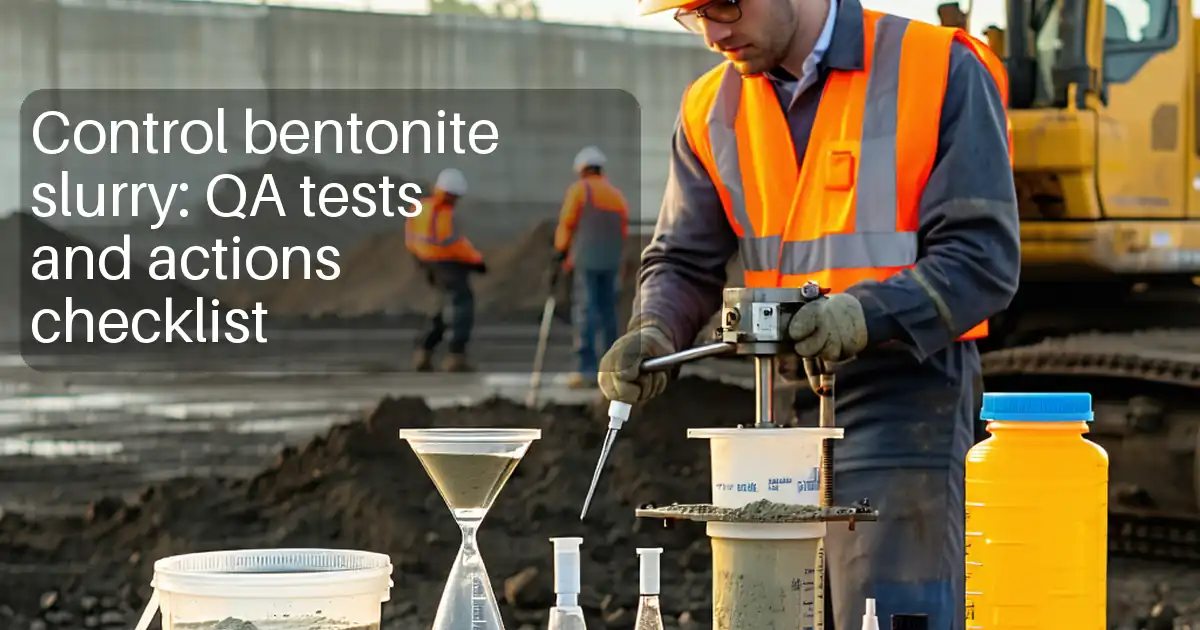
Control bentonite slurry is critical to keeping excavations stable and ensuring clean, bondable concrete interfaces. This checklist focuses on bentonite slurry testing and slurry quality control using proven field methods: mud balance density, Marsh funnel viscosity, sand content kit, pH measurement, and filtrate loss on a filter press. It applies to bored piles, diaphragm walls, and similar foundations where slurry supports open excavation. By holding density, viscosity, solids, alkalinity, and filtrate within target ranges, you reduce risks of sidewall collapse, debris inclusions, excessive bleed, and weak zones in the completed element. The scope excludes polymers; only sodium bentonite hydration and non-polymer treatments (e.g., soda ash for pH adjustment) are considered. Outcomes include predictable excavation performance, lower cleaning time, and consistent concrete quality. Use this interactive list to track readings, flag nonconformities, record corrective actions, and attach evidence. Start in interactive mode, tick items, add comments, and export PDF/Excel with a QR-secured audit trail.